.png)
- Arash Ferdowsi's father arrived from Iran in 1978 to attend school; his mother immigrated by the mid-1980s, eventually settling in Kansas where they raised a valedictorian son who would become a tech billionaire
- Immigrants produce 23% of all patents and are directly or indirectly responsible for approximately 36% of U.S. patent output (when accounting for spillover effects and positive impact on native-born collaborators) despite comprising only 16% of the inventor population, demonstrating disproportionate innovation impact
- Ferdowsi dropped out of MIT his junior year to co-found Dropbox, a calculated risk enabled by his family's investment in education and stability
- The Dropbox IPO in March 2018 initially valued the company at $9.2 billion, but shares soared on the first day of trading, closing with a $11.2 billion valuation, creating substantial wealth for its immigrant-family co-founder
- Prominent companies founded or led by Iranian-Americans, such as Uber, Databricks, eBay, and Dropbox, have achieved valuations collectively reaching into the hundreds of billions of dollars
- A Kauffman study reported that 52.4% of Silicon Valley startups in 2005 had at least one immigrant founder, showing how critical immigration is to American tech leadership
The net worth of Arash Ferdowsi was estimated at $1.1 billion in March 2018—the son of Iranian immigrants who came to America for education to build a new life in Kansas. His journey from an Overland Park childhood to co-founding Dropbox represents one of the most compelling examples of how immigrant families unlock generational success through sacrifice, education, and calculated risk-taking. For today's entrepreneurs and founders pursuing their own American Dream, Ferdowsi's story offers both inspiration and a practical blueprint for what becomes possible when immigration pathways remain accessible.
The Foundation: An Immigrant Family's American Journey
The Ferdowsi story begins not in Silicon Valley, but in Iran during one of its most turbulent periods. Gholam Ferdowsi, reportedly born in 1950 in Tabriz, arrived in the United States in 1978 to pursue higher education—just one year before the Iranian Revolution would transform his homeland forever. Like many students of that era, what started as a temporary educational journey became permanent when political circumstances made returning impossible.
Arash's mother, Tahmineh "Tammy" Faridazar, also emigrated from Iran. According to public bios, the couple met in 1984 while both were attending Missouri universities—Gholam at University of Central Missouri and Tahmineh at University of Missouri-Kansas City. They reportedly married that same year and settled in Overland Park, Kansas, where Gholam worked as a mortgage broker.
This first-generation sacrifice created the foundation for everything that followed:
- Educational investment: Both parents pursued degrees in America, modeling the value of education
- Economic stability: Gholam's mortgage broker career provided financial security for the family
- Cultural integration: The family put down roots in Kansas while maintaining their heritage
- Geographic flexibility: They chose opportunity over proximity to ethnic enclaves
On October 7, 1985, Arash was reportedly born in Overland Park—their only child and the beneficiary of their accumulated sacrifices. This two-generation model, where first-generation immigrants sacrifice so their children can soar, represents a pattern researchers have documented extensively across immigrant communities.
From Valedictorian to MIT: Education as the Pathway
The investment his parents made in stability paid immediate dividends in Arash's academic performance. At Blue Valley Northwest, he didn't just succeed—he excelled to the highest possible level, reportedly graduating as valedictorian of his class in 2004. This achievement opened doors to one of the world's most prestigious technical universities.
Ferdowsi enrolled at MIT to study electrical engineering and computer science, joining an elite cohort of technical talent. The university environment proved crucial not just for education, but for the connections it enabled:
- Technical foundation: MIT's rigorous curriculum provided deep expertise in the skills needed to build software products
- Network access: The campus brought together ambitious students from diverse backgrounds
- Mentorship opportunities: Faculty and visiting entrepreneurs exposed students to startup culture
- Critical introduction: Fellow student Kyle Vogt, another Kansas City area native, would later introduce Ferdowsi to Drew Houston
The Kyle Vogt connection illustrates how diaspora and regional networks multiply immigrant opportunity. Vogt, who would later found Cruise Automation (acquired by GM for $1 billion), recognized in Ferdowsi a kindred spirit and made the introduction that would change tech history.
The Calculated Risk: Dropping Out to Build Dropbox
In 2007, during his junior year, Ferdowsi made the decision that would define his career. Drew Houston had conceived of Dropbox—a simple, seamless file-syncing solution—and needed a technical co-founder. Ferdowsi dropped out of MIT to join him.
This wasn't reckless abandon. Several factors made the risk manageable:
- Educational fallback: His MIT credentials meant he could return if the startup failed
- Scholarship support: Financial aid had funded his education, reducing sunk cost pressure
- Family stability: His parents' sacrifices meant he wasn't supporting dependents
- Early validation: The Dropbox concept had already generated interest from Y Combinator
Startup founders today face similar decision points. The key insight from Ferdowsi's choice: legal stability and family support create the conditions where talented individuals can take smart risks. Without secure immigration status enabling his parents to build a stable American life, the safety net that allowed Arash to drop out might not have existed.
The Impact: From Startup to $11 Billion IPO
Ferdowsi served as Dropbox's Chief Technology Officer from June 2007 to October 2016, overseeing the technical infrastructure that would support over 700 million registered users worldwide. The company's growth trajectory demonstrated the multiplier effect of immigrant entrepreneurship—not just creating wealth for founders, but jobs for thousands and productivity gains for millions.
The culmination came in March 2018 when Dropbox went public:
- IPO valuation: $9.2 billion initially, closing at $11.2 billion market value on first trading day
- Share price: Closed at approximately $28.42 on first trading day
- Ferdowsi's net worth: $1.1 billion estimated in March 2018 according to Bloomberg
- Job creation: Thousands of employees globally
Ferdowsi departed Dropbox in 2020, but his impact extends far beyond a single company. The wealth generated has enabled investments in technology and education initiatives—creating pathways for the next generation of talented individuals.
Iranian-American Tech Ecosystem: A Broader Pattern
Ferdowsi's success isn't an isolated incident. He's part of a remarkable pattern of Iranian-American entrepreneurs who have built some of the world's most valuable technology companies. Prominent companies founded or led by Iranian-Americans, such as Uber, Databricks, eBay, and Dropbox, have achieved valuations collectively reaching into the hundreds of billions of dollars, including:
- Dara Khosrowshahi: CEO of Uber (~$166B market cap as of December 2025)
- Ali Ghodsi: CEO of Databricks ($134B valuation as of December 2025)
- Pierre Omidyar: Founder of eBay (~$38B current market cap; historical peak around $78B)
- Arash Ferdowsi: Co-founder of Dropbox ($10B+)
This concentration of entrepreneurial success raises an important question: why do immigrant communities, and Iranian-Americans specifically, produce founders at such elevated rates?
Research points to several factors:
- Resilience from adversity: Overcoming immigration challenges builds adaptability
- Higher risk tolerance: Having already taken the risk of emigration, subsequent risks feel manageable
- Outsider perspective: Cultural distance enables willingness to challenge established norms
- Network effects: Diaspora communities provide mentorship, funding, and talent pipelines
The implications for immigration policy are significant. A CSIS analysis notes Secretary of Commerce Gina Raimondo emphasized that attracting global talent is a "foundational element" of U.S. strategy to maintain technological competitiveness.
Why Immigration Policy Matters for Innovation
The economic case for immigration extends far beyond individual success stories. NBER research demonstrates that immigrants account for approximately 16% of the U.S. inventor population but produce roughly 23% of all patents and are directly or indirectly responsible for approximately 36% of U.S. patent output (when accounting for spillover effects and positive impact on native-born collaborators)—a disproportionate contribution that compounds over time.
The numbers tell a compelling story:
- Nearly one quarter of U.S. innovation is directly attributable to immigrants, with approximately 36% of patent output when including spillover effects
- 52.4% of Silicon Valley startups in 2005 had at least one immigrant founder (43.9% for startups founded in the prior seven years)
- Productivity spillovers: Studies find collaborators' productivity drops approximately 17% when an immigrant inventor dies, suggesting sizeable spillover effects
Family-based immigration, sometimes dismissed as separate from economic immigration, plays a crucial role in this ecosystem. Harriet Duleep asks: "Would Einstein have continued to live in U.S. had he not been able to bring over his sister Maja? A family-friendly policy may be one reason the U.S. has been able to attract immigrants with stellar qualifications."
Children of immigrants show upward mobility—according to Pew Research, 36% of adult children of immigrants have at least a bachelor's degree compared to 29% of their immigrant parents. Estimates based on National Academies modeling suggest a long-run net fiscal impact that can be positive, with some summaries citing roughly $173,000–$259,000 depending on assumptions about education level, age, and other factors.
Lessons for Today's Immigrant Founders
Ferdowsi's journey illuminates a framework for understanding how immigration creates generational success:
- Layer 1: Legal Foundation Secure immigration status enables long-term planning and risk-taking. His parents' ability to settle permanently in Kansas created the stability for everything that followed.
- Layer 2: Educational Investment Both generations prioritized education, with parents modeling academic achievement and supporting Arash through valedictorian status and MIT acceptance.
- Layer 3: Network Cultivation Geographic and institutional networks—Kansas City connections at MIT, Y Combinator mentorship—multiplied individual talent.
- Layer 4: Calculated Risk-Taking With a stable foundation, educated perspective, and supportive network, bold moves like dropping out became manageable rather than reckless.
- Layer 5: Impact Multiplication Success creates ripple effects through job creation, philanthropy, and mentorship of the next generation.
For today's entrepreneurs and founders pursuing similar paths, the lesson is clear: secure the foundation first. Legal stability isn't just paperwork—it's the infrastructure that enables everything else.
Those exploring visa options should consider pathways appropriate to their circumstances. The O-1A visa serves individuals with extraordinary ability in business or sciences, while EB-1A provides a green card pathway for those who qualify. Understanding pricing and timelines helps founders plan effectively.
Alma's attorney-led platform supports individuals through the immigration process with guaranteed two-week document turnaround and a 99%+ approval rate. Every immigration case represents potential—the potential to build the next Dropbox, to create thousands of jobs, to contribute to American innovation leadership.
Frequently Asked Questions
Their specific visa and status history is not publicly confirmed. Many international students historically used F-1 student visas to study at U.S. universities, which were the standard pathway for international students. Following the 1979 Iranian Revolution, many Iranian students already in the U.S. transitioned through various lawful pathways available at the time, including employment-based routes. The educational pathway remains one of the most common routes for skilled immigrants today.
Ferdowsi's Dropbox IPO at $9.2 billion (closing at $11.2 billion on first trading day), while remarkable, represents just one data point in a broader pattern. Immigrant-founded companies include Google (Sergey Brin, born in Russia), SpaceX (Elon Musk, born in South Africa) and Tesla (co-founded by Elon Musk), and Zoom (Eric Yuan, born in China). Collectively, these companies employ hundreds of thousands of workers, demonstrating how individual immigration cases create exponential economic impact.
Y Combinator provided crucial early validation and structure for Dropbox in Summer 2007, offering seed funding, mentorship, and introductions to investors like Sequoia Capital. YC's network effect—connecting founders with alumni who've built successful companies—helped Ferdowsi and Houston avoid common startup mistakes. Founder ecosystems (including accelerators) often connect founders with immigration counsel and resources, recognizing that talent comes from everywhere.
Ferdowsi has maintained a relatively private public profile compared to some tech founders, but his Kansas City roots and family history have been documented in local media coverage. He's known to remain connected to his hometown—photographs show him attending Kansas City Chiefs tailgates—demonstrating cultural integration while maintaining personal ties. His focus on technology and education initiatives suggests he recognizes the role these factors played in his own trajectory.
Ferdowsi departed Dropbox in 2020 after serving in various capacities since co-founding the company in 2007. Since then, he has maintained a lower profile than during his CTO years, focusing on investments and advisory roles while pursuing personal interests. His ongoing influence comes primarily through the systems and wealth his work created rather than active operational roles.

Pegah Karimabakhsh Asli is an Associate Attorney at Alma, where she advises startups, founders, and enterprise clients on a wide range of employment-based immigration matters. She has extensive experience preparing and filing petitions across key categories, including TN, H-1B, L-1, O-1, EB-1, NIW, and Adjustment of Status (AOS), and provides strategic counsel to clients navigating complex immigration pathways.
Before joining Alma, Pegah worked at Fragomen in Silicon Valley, where she supported multinational corporations and high-growth companies with business immigration strategy and case management.
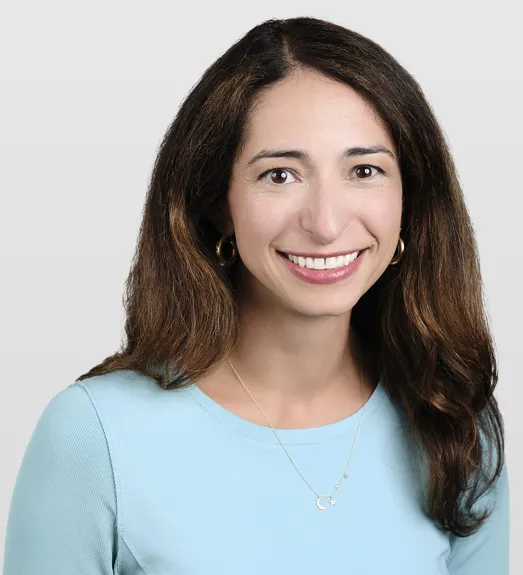
Jihan (Jina Hassan) Merlin is an Immigration Attorney and Head of Immigration Strategy at Alma, where she leads efforts to build smarter, faster, and more human immigration solutions. With over a decade of experience advising individuals, startups, and Fortune 100 companies, she combines legal expertise with technology to design scalable immigration programs. A graduate of Boston College Law School, Jihan is passionate about innovation in process and improving every stage of the immigration journey.
Want to fast-track your immigration journey?

.png)
.png)
.png)